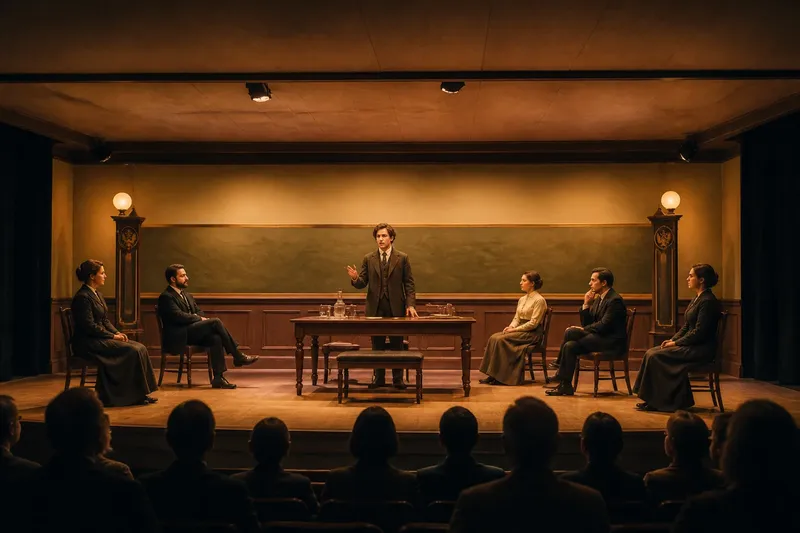
The Prop Table Is Not a Storage Shelf
Prop table organization makes handoffs easier to track, returns simpler to verify, and missing items quicker to spot before the next scene begins.
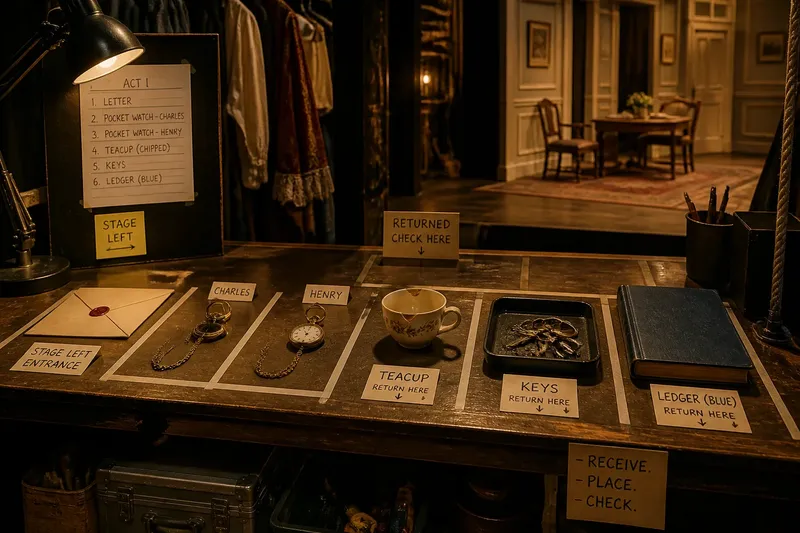
Where should the chipped teacup go after the scene, and how can the next actor tell which pocket watch is theirs? Prop table organization answers those questions before a performer has to ask from the wings. A table arranged only to fit the most objects may look tidy, yet still leave everyone guessing during a handoff.
A useful prop table works like a map. Its layout shows what belongs there, who uses it, and where it goes when it comes back. A few clear decisions, matched to the show’s traffic, matter more than elaborate labels or extra space.
Arrange props around the next action
An actor or crew member should be able to find a prop, recognize its assigned place, and return it without shifting unrelated items. The arrangement should also make an empty spot easy to notice.
Think of the surface as a sequence of destinations, not a general landing zone. A hand prop waiting for an entrance, one carried offstage, and one returned after use have different jobs, even if all three are mugs. Keep those jobs visually distinct so nobody has to infer what an object’s position means.
Follow the production’s actual movement. If a performer enters from stage left and passes a letter near the prompt corner, the letter’s position and handoff route matter more than arranging objects by color. The table supports the performance; it is not a display case.
Make handoffs easy to reach and read
Place props where the person who needs them can reach without crossing another performer’s path or rummaging through a cluster. Group by entrance, scene, or user—whichever best matches the show’s traffic. Then make the route to each object clear to the person responsible for it.
Masking tape can divide a shared table into named zones. A small tray keeps keys or rings from wandering, while a card with a character or entrance name may be easier to scan than a color code in dim backstage light. Leave enough room around frequently handled objects for someone to lift one without sweeping others aside.
Say you are staging an invented drawing-room scene: an actor carries a sealed letter onstage, gives it to a partner, then returns it through the stage-left wing. Reserve a labeled landing area at the stage-left end of the table and place the letter there before the scene. After the actor returns it, the crew can check that marked area before the next entrance; if it is empty, the letter still needs to be located.
Give every returning prop a visible home
A return spot might be a taped outline, a shallow tray, or an open patch of table with a readable label. Make the empty home distinct from the occupied one, so a quick glance can reveal whether the prop has come back.
Assign a receiver for each handoff. One person can take the prop from an actor and put it in its home; that person or another crew member can check the spot before the next scene. Keep the actions distinct: receive, place, check. For a small production, one person may handle all three, but the responsibility should still be explicit.
A short prop list should match the table rather than merely repeat the script inventory. Record each prop, its home, and the person or entrance that uses it. If it moves during a scene, include its return destination. For an item that must stay with a performer or be stored elsewhere, note where to look without placing it on the shared surface.
Label the distinctions people need to see
Label locations or differences that are otherwise easy to miss: a zone, character, entrance cue, or return point. Keep wording short and legible in the actual backstage lighting.
Use the names people already use in rehearsal. If the cast calls an object “the blue ledger,” a label that says only “book” adds a moment of interpretation. When two objects look alike, distinguish them by user or scene instead of relying on a subtle visual detail.
Resist labeling every inch of the table. Too many cards compete for attention. Keep clear space around a prop passed directly between people, and leave a visible area for items that have returned but still need checking. For delicate, valuable, or restricted objects, follow the owner’s or production’s handling directions.
Check the layout against the show’s traffic
Walk through the handoffs with the people who will perform them. Start with the table in its show condition. Rehearse taking each item, carrying it where needed, and returning it. Watch for hesitation, blocked reach, or a question about where something belongs.
Pay attention between scenes, too. A return spot might sit behind a costume rack, or a crowded tray might hide whether a small object is missing. If either happens, move or regroup the props, then repeat the same traffic to see whether the intended action is clear.
Keep a brief change note when the layout shifts. A handwritten diagram taped inside a prop bin can help the next crew member follow the arrangement. Update it when blocking or a handoff changes; an outdated map can create confusion.
What should happen when props are missing or look alike?
What if two props look almost identical?
Separate them by user or scene, and give each a plainly named place. If a visible distinction suits the production, choose one performers can recognize quickly rather than relying on a subtle difference.
Should every actor have a personal section?
Only if that matches the traffic. A character-based zone can help when performers collect several items together, while an entrance-based zone may work better when many people share the table.
Who should reset the table after a scene?
Assign a specific performer or crew member to receive and return each prop, then record that responsibility in the running notes. Shared responsibility without a clear receiver can leave everyone assuming someone else handled it.
Keep the layout current as blocking changes
Revisit the table when blocking, props, or backstage traffic shifts. A new entrance can turn a convenient spot into a detour, and an added object can crowd a tray that once kept small pieces distinct. Update the map along with the show rather than relying on an informal reminder.
Prop table organization works best when every prop has a readable next destination. If a performer can collect, pass, and return an object without hunting for it, the table is doing its job. Keep the surface limited to props that need to be picked up, returned, or checked there; personal belongings and refreshments can obscure the assigned homes.