A Flat Backdrop or an Open Stage?
Choosing a flat backdrop or open stage helps a small production set visual context, preserve movement, and give the audience a clear view of the action.
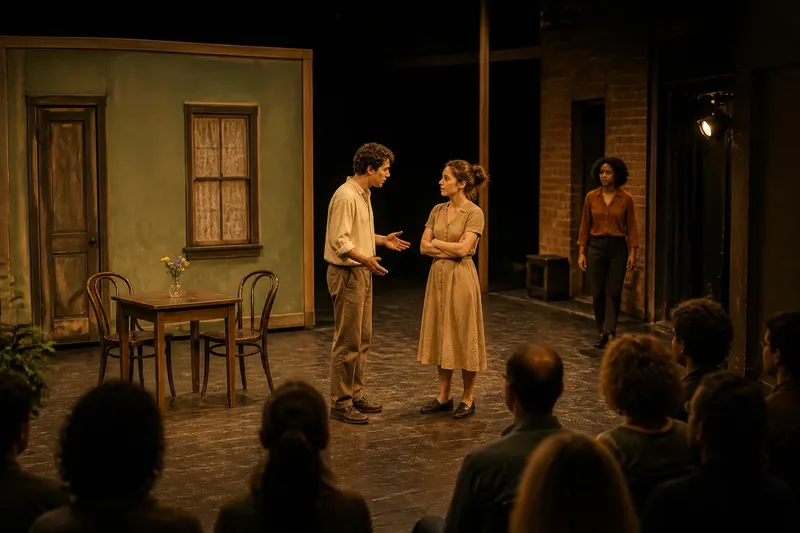
Should your small production use a flat backdrop or an open stage? That choice shapes more than the look of the room: it affects where actors can move, what the audience imagines, and how quickly the space can serve a new scene. A flat backdrop or open stage works best when it supports the play’s central visual idea rather than competing with it.
A flat gives the audience a place to begin
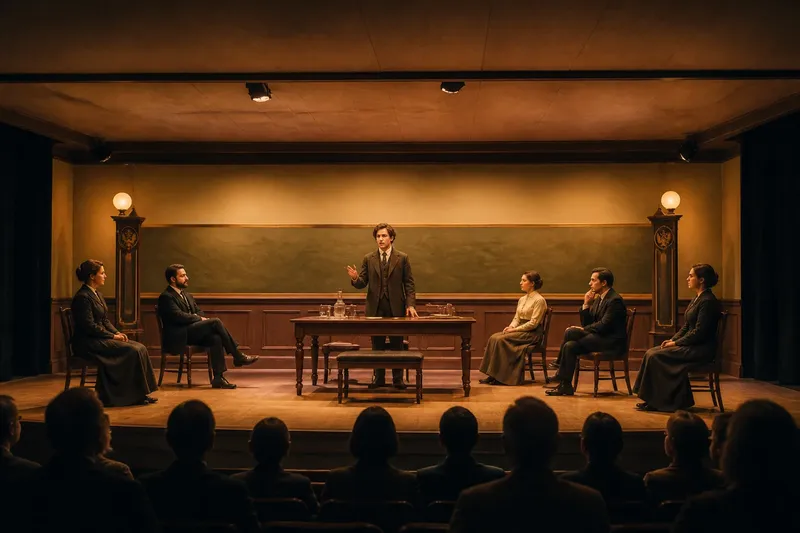
A flat is a rigid, painted scenic panel that creates a visible boundary behind the performers. It might suggest a parlor wall, a shopfront, or an abstract field of color. Unlike a detailed set with built scenery, a single flat can establish context without filling the playing area with furniture and units.
That context can be useful when the audience needs to read the location quickly. A painted window or doorway helps distinguish a domestic scene from a public one. A strong color or shape can also establish mood before anyone speaks. The image does some quiet work, leaving dialogue and performance free to carry other information.
A flat suits productions with a stable visual world, a limited number of locations, or scenes that benefit from a firm background. It can give a small room a clear frame, especially when the venue itself has distracting walls, storage, or a view into backstage. It also offers a defined surface for lighting to reveal or soften.
But a flat is not neutral. It draws the eye, and its edges become part of the composition. Actors may need to avoid blocking a painted feature, while entrances and exits must fit the physical arrangement. A panel that looks simple from the front can also affect sightlines from the sides, so consider where the audience sits before settling its position.
An open stage makes the room part of the design
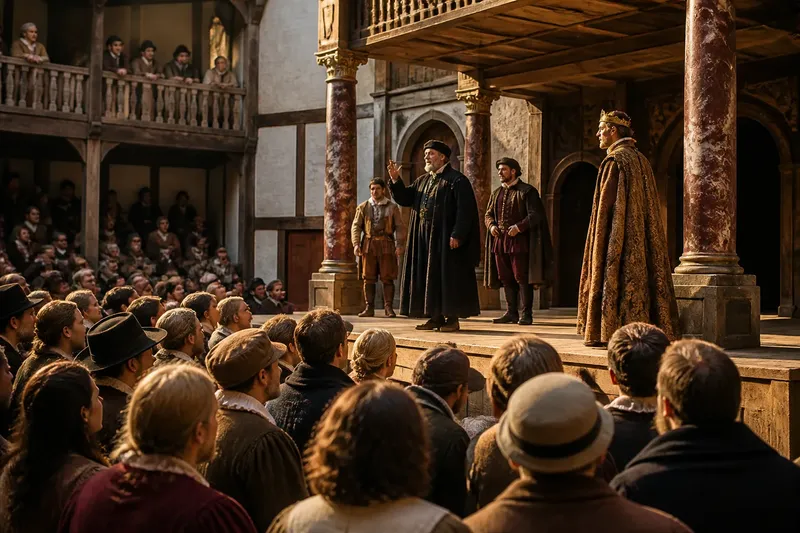
An open stage leaves the background exposed or uses the venue’s existing architecture as the visual setting. The audience sees more of the room, and the performers can claim space through their movement, objects, lighting, and sound rather than through a painted wall.
This approach suits plays that move rapidly between places, rely on ensemble movement, or invite viewers to imagine scenery beyond what is physically present. It can also make a cramped room feel less boxed in. With fewer scenic elements behind the actors, a turn, crossing, or change in distance can carry more of the visual storytelling.
Open does not mean unfinished. A bare wall can draw attention to its marks, fixtures, or color. A backstage doorway may become a visible part of the composition. If the room’s look is not useful to the production, the openness may feel accidental rather than deliberate. The design still needs a point of view, even if that point of view is restraint.
Movement can become especially legible against a quiet background. A performer entering from the audience, circling another actor, or shifting a chair may transform the scene without a change of scenery. That flexibility is valuable for a small cast or a fast-moving script, but it asks the staging to make each transition clear.
A partial frame can borrow from both
Between a full flat and a completely open stage is a partial frame: a narrow scenic panel, a hanging fabric, a painted strip, or a few carefully placed elements. It can suggest a location while leaving the center and sides open for movement. A translucent curtain, for instance, may soften a busy wall without turning it into a literal room.
This middle choice suits a production that needs a recurring visual anchor but changes location often. A single panel can act as a boundary, a projection surface, or a shape that actors move around. A pair of lightweight masking pieces can frame an entrance while preserving a clear central playing area.
Partial scenery works only if its purpose is easy to read. A lone object or strip of fabric can look arbitrary if it neither clarifies the setting nor supports action. Ask what the element does in performance: does it create a meaningful threshold, conceal a distracting part of the room, or give actors a useful route? If it has no clear job, the open stage may be stronger.
Which approach fits your production?
When does a flat backdrop help most?
Choose a flat when a stable location or visual mood is essential to the play’s first impression. It is especially useful when the venue’s existing background distracts from the action and a single scenic image can replace that distraction.
When is an open stage the better choice?
Favor an open stage when actors need to travel freely, scenes shift often, or the script asks the audience to imagine several places. It also suits a venue whose own walls and architecture already contribute to the production’s atmosphere.
Can a small venue use both?
Yes. A flat can anchor one end of the playing area while the remaining space stays open for entrances, transitions, and ensemble movement. The balance should preserve clear views and leave performers enough room to use the stage without dodging scenic edges.
Choose by watching the action in the room
Start with the scenes that depend most on space. Mark entrances, exits, major crossings, and moments when actors gather or separate. Then imagine those actions against a flat, an open background, and a partial frame. The useful question is not which option looks more finished; it is which makes the stage action easiest to understand.
Check the view from the back and sides of the audience area. A flat may make a scene feel focused from the center but conceal an actor at an angle. An open stage may preserve visibility yet expose a bright door or an untidy corner. Use a chair, tape, or a temporary sheet to stand in for the proposed scenic boundary while you consider these views.
Also consider scene changes. If the production needs a rapid shift, ask whether the backdrop can remain in place without contradicting the next location. If not, decide whether actors can transform the space through movement, light, or a small set of objects. A fixed image can be an advantage when scenes share a visual world, but a burden when each scene demands a different one.
Imagine your play alternates between a shop and a street, with actors carrying a chair across the room during each transition. A painted shop wall may establish the opening scene crisply, but it could make the street sequence feel trapped. A narrow panel at one side might preserve the shop’s identity while leaving a broad route for the chair and performers. The expected result is a visible change of place without interrupting the crossing that carries the scene.
Make the decision from the audience’s view
For a practical comparison, tape a rough boundary on the floor and hang a plain sheet or paper mock-up where a flat might go. Let actors run a short passage with the outline present, then repeat it with the background exposed. Watch from more than one seat. Notice whether the location reads, whether gestures remain visible, and whether transitions feel like part of the action.
Do not judge only by a still image. A backdrop may look elegant in a photograph and feel restrictive once performers cross in front of it. An open room may look plain before rehearsal and become vivid when actors use its depth. If you can, include a lighting cue in the comparison; shadows and color can change the effect of both approaches.
Before committing to construction, check venue rules, access needs, and the scenic materials’ instructions with the relevant venue staff or suppliers. For the design decision itself, keep the play’s visual priorities in view: use a flat when a clear background carries meaning, an open stage when movement and imagination do the work, and a partial frame when the production needs a little context without giving up flexibility.
A flat backdrop or open stage is not a contest between finished and unfinished scenery. It is a choice about what the audience should notice first. If the background helps them read the action, keep it; if the performers’ movement tells the story more clearly, give them room.